
How Can I Provide High Voltage to Test Equipment When the Supply Voltage Is 230V?
When testing LED drivers, LED bulbs, and other electrical loads, it may sometimes be necessary to apply a test voltage higher than the available 230V AC supply.
For example, certain testing conditions may require an AC voltage of 450–500V. In such applications, a Variac (Variable Autotransformer) can be used along with an appropriate transformer arrangement to obtain the required test voltage.
What Is a Variac?
A Variac, also known as a Variable Autotransformer, is a device used to obtain a continuously adjustable AC output voltage.
Unlike a conventional transformer, which normally provides a fixed transformation ratio, a Variac allows the output voltage to be adjusted manually over a specified range.
Depending on its design and input supply, a Variac can provide an output voltage that is lower than, equal to, or higher than the input voltage.
For a typical single-phase application, a Variac may provide an adjustable output of approximately 0–270V AC.
When a higher voltage such as 450–500V AC is required, an appropriate step-up transformer can be combined with the Variac.
Method 1: Single-Phase Supply Using a Variac and Step-Up Transformer
A conventional single-phase Variac generally provides an adjustable output of approximately 0–270V AC.
However, during testing of LED drivers, LED bulbs, or other electrical loads, it may be necessary to test the equipment at 450–500V AC.
This can be achieved by connecting a step-up transformer after the Variac.
Basic Connection
230V AC Supply → Variac → Step-Up Transformer → Meter→ Load Under Test
The Variac controls the voltage supplied to the step-up transformer. The transformer then increases the voltage to the required test level.
For example, depending on the transformer ratio, an adjustable Variac output can be converted into a higher AC voltage suitable for the test requirement.
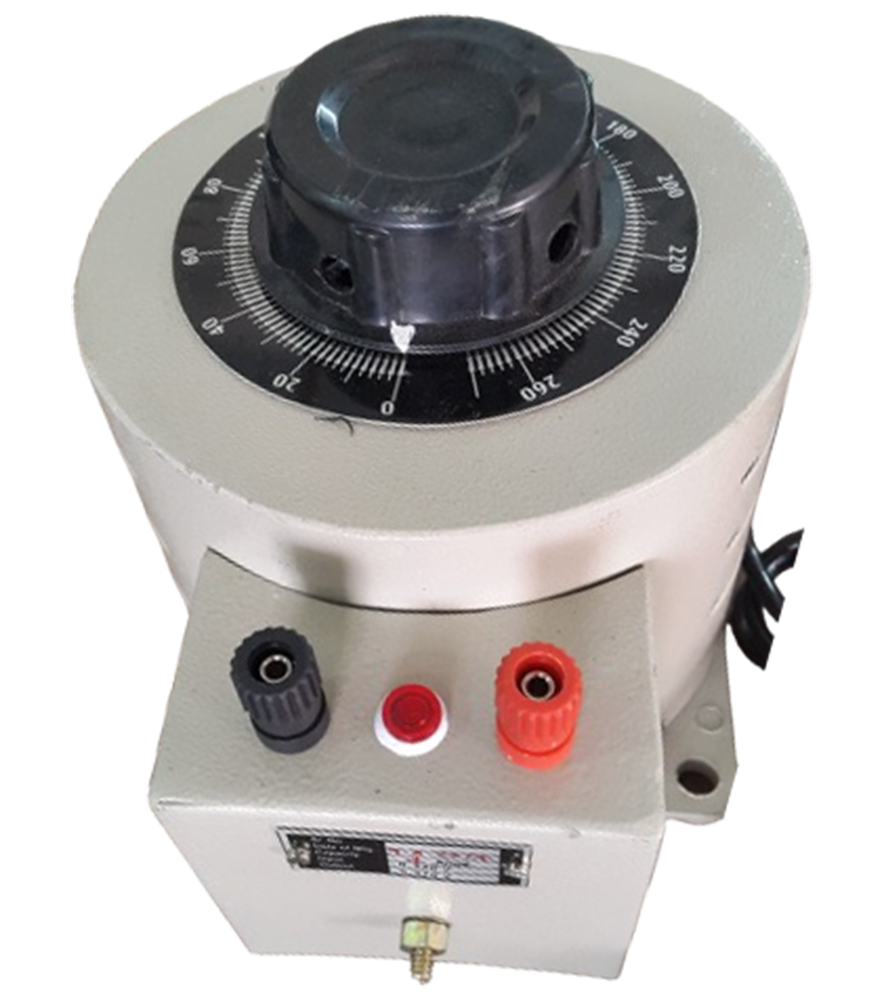
Figure 1: Single-Winding Variac
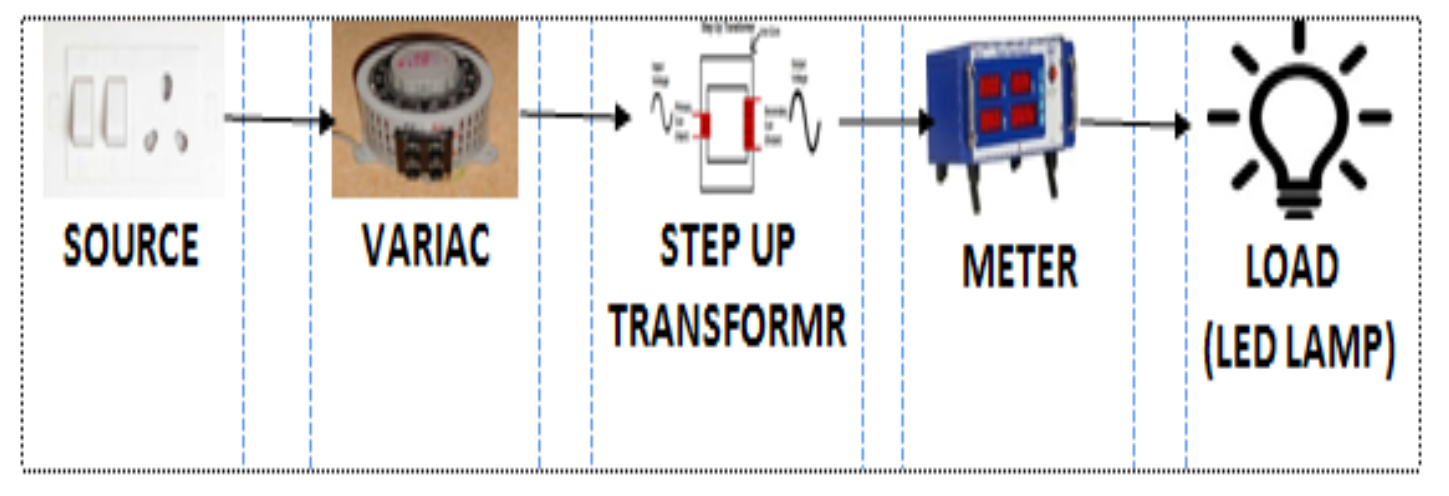
Figure 2: Low Voltage Converted to High Voltage Using a Step-Up Transformer and Variac
Advantages
- Suitable for single-phase testing.
- Output voltage can be adjusted continuously.
- Higher test voltages can be generated using a suitable step-up transformer.
- Useful for LED driver and LED load testing applications.
Method 2: Two-Winding Variac
A conventional single-phase Variac normally provides an output range of approximately 0–270V AC.
For applications where a higher voltage or a phase-to-phase test condition is required, a special two-winding Variac arrangement can be used.
A two-winding Variac uses two variable windings to provide the required output voltage configuration.
This type of arrangement can be useful when the equipment under test needs to be subjected to a voltage corresponding to a phase-to-phase supply condition.
Basic Connection
AC Supply → Two-Winding Variac → High-Voltage Output → Meter→ Load Under Test
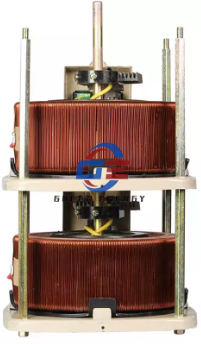
Figure 3: Two-Winding Variac
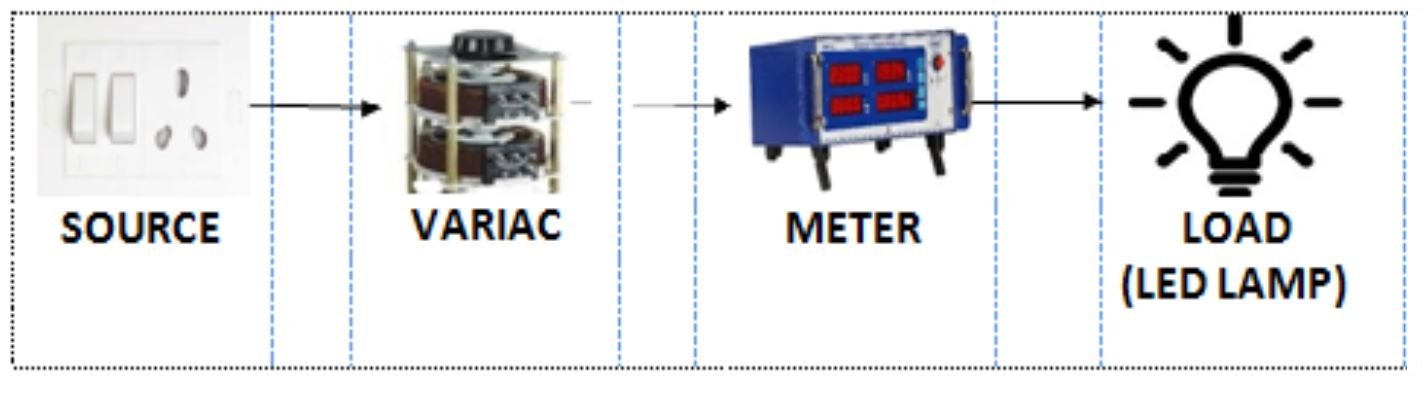
Figure 4: High-Voltage Output Using a Two-Winding Variac
Applications
Two-winding Variac arrangements can be considered for:
- Phase-to-phase voltage testing
- LED driver testing
- LED bulb testing
- AC load testing
- Special high-voltage test requirements
Method 3: Three-Phase Supply Using a Three-Phase Variac
For testing equipment designed for a three-phase AC supply, a three-phase Variac can be used.
A three-phase Variac can be constructed using three individual variable autotransformers.
The three Variacs are:
- Electrically connected in a suitable three-phase configuration.
- Mechanically coupled in tandem.
- Operated together to maintain simultaneous voltage adjustment across the three phases.
For a 415V, three-phase AC supply, a suitable three-phase Variac can provide an adjustable output from approximately 0–415V AC. Depending on the design, some Variac configurations can provide an output up to approximately 470V AC.
Basic Connection
415V 3-Phase Supply → 3-Phase Variac → Adjustable 3-Phase Output → Meter→ Load Under Test
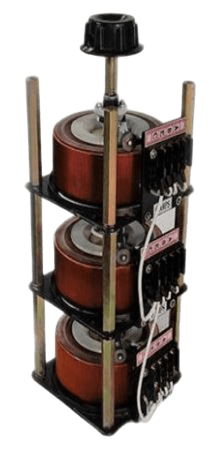
Figure 5: Three-Phase Variac
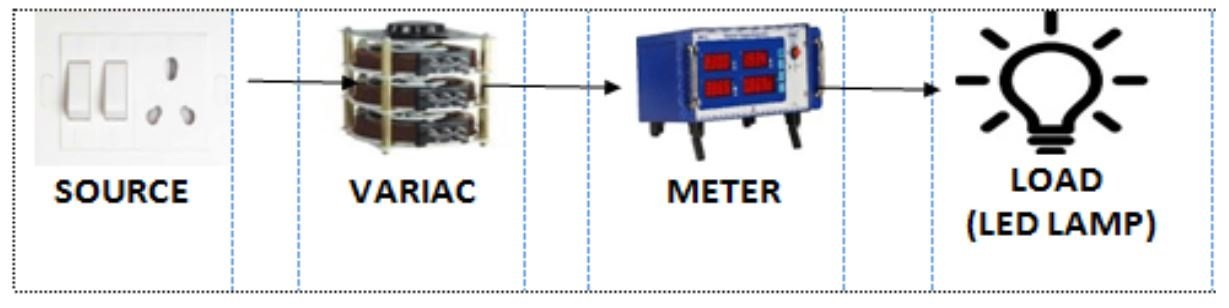
Figure 6: Adjustable Three-Phase Output Using a Three-Phase Variac
Comparison of the Three Methods
| Method | Input Supply | Equipment Used | Typical Output | Typical Application |
|---|---|---|---|---|
| Method 1 | Single Phase 230V | Variac + Step-Up Transformer | Up to 450–500V* | LED driver / LED load testing |
| Method 2 | Single/Phase-to-Phase application | Two-Winding Variac | Application dependent | Phase-to-phase testing |
| Method 3 | Three Phase 415V | Three-Phase Variac | 0–415V / up to ~470V* | Three-phase load testing |
*The actual output voltage depends on the Variac design, transformer ratio, load current, power rating and other electrical parameters.
Why Use a Variac for LED Driver Testing?
LED drivers may need to be tested at different input voltage conditions to evaluate their performance and reliability.
A Variac provides a convenient way to gradually increase or decrease the input voltage rather than applying the required voltage directly.
For example, a test setup can be used to evaluate the LED driver at:
- Low input voltage
- Nominal input voltage
- High input voltage
- Phase-to-phase voltage conditions
- Other specified AC test voltages
When higher voltages are required, a step-up transformer can be added to extend the available voltage range.
Important Safety Precautions
Testing equipment at 450–500V AC or higher can be hazardous. The test setup must be designed and operated with appropriate electrical protection.
Before performing any high-voltage test:
- Use Variacs and transformers with suitable voltage and current ratings.
- Ensure that all components have adequate insulation and dielectric strength.
- Use suitable fuses, circuit breakers and protection devices.
- Provide proper protective earthing/grounding.
- Use an enclosure suitable for the test voltage.
- Use properly rated cables, connectors and terminals.
- Verify the output voltage using a suitably rated measuring instrument.
- Prevent accidental contact with energized parts.
- Provide suitable emergency isolation for the test setup.
- Follow applicable electrical safety standards and laboratory procedures.
Never assume that a Variac output is isolated from the mains. A standard Variac is an autotransformer and does not provide galvanic isolation.
Variac Supplier References in India
The following companies are provided as general supplier references for Variac and variable-transformer requirements.
This information is provided for reference only. Customers should independently verify the supplier's current contact details, product specifications, availability, pricing, ratings and suitability before placing an order.
1. Ravistat
Address:
Plot No. A-420, Road No. 28,
Opp. Emco Co., Ram Nagar,
M.I.D.C., Wagle Estate,
Thane (W) – 400604, Maharashtra, India
Phone: +91-22-2582 4626 / 17
Fax: +91-22-2582 4647
Email: response@variableautotransformer.com
Email: sales@ravistat.com
2. Green Dot Electric Limited
Address:
G-9, Hemkunt Tower / Modi Tower,
98, Nehru Place,
New Delhi – 110019, India
Email: info@greendotindia.com
Email: greendotindia@hotmail.com
Email: greendotelectric@gmail.com
Phone: +91-11-2622 2088
Fax: +91-11-2622 2088
3. Supplier Contact Reference
Contact Number: +91 99105 58428
Conclusion
A Variac is a useful solution when an adjustable AC voltage is required for LED driver and electrical load testing.
If the available supply is 230V AC but the test requires 450–500V AC, a suitable Variac combined with a step-up transformer can be used.
For special phase-to-phase testing requirements, a two-winding Variac may be considered, while a three-phase Variac can be used for three-phase equipment testing.
The correct setup should always be selected based on the required:
Voltage + Current + Power/VA Rating + Number of Phases + Test Requirement + Insulation/Safety Requirements